ServicesWhole-Home Filtration
Whole-Home Filtration in Waukesha
We put sediment and carbon filtration at the point where water enters your home, so showers, the kitchen tap and the washer all draw treated water free of chlorine odor and grit. We size each system to your fixtures and build it so routine upkeep stays simple year after year.
How whole-home filtration works
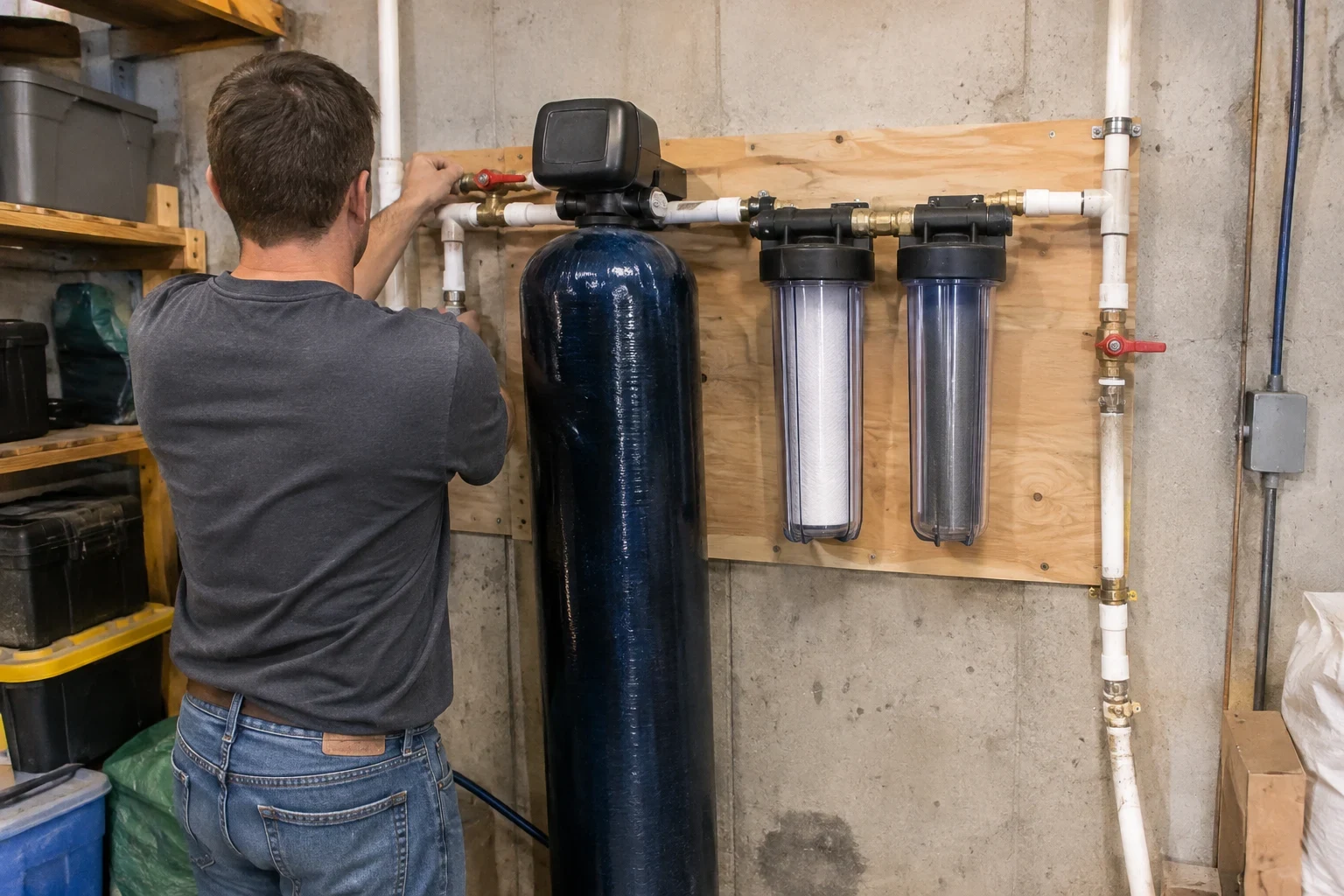
The equipment goes in where the water service comes into the house, most often in the basement near the meter. Our usual build has two stages: a sediment prefilter followed by a tank of catalytic carbon. The first stage catches sand, loose pipe scale and rust flakes. The second adsorbs chlorine and chloramine, the disinfectants behind that swimming-pool smell and flat taste.
This is the right choice when the problem follows you from room to room instead of staying at the kitchen sink. If drinking and cooking water is your main concern, under-sink reverse osmosis is often a better match. If you are fighting scale and spots, start with water softeners. In many basements the carbon ends up plumbed ahead of the softener, since chlorine gradually oxidizes softener resin and cuts years off its life.
We set these systems up for maintenance rather than replacement. The carbon tank backwashes on a timer to rinse itself, and when the media is eventually used up, the tank and control valve stay put. Only the carbon gets swapped.
What we install and set up
- 01
Sizing to your fixtures
Before choosing equipment we count bathrooms and fixtures and measure the main line. Carbon needs contact time with the water, and an undersized tank pushes water through too fast for the media to catch the chlorine.
- 02
Sediment prefilter
A spin-down screen or cartridge housing stops particles upstream of the carbon. Clean water entering the bed is the main reason the media lasts as long as it does.
- 03
Catalytic carbon tank and control valve
We choose catalytic carbon because ordinary carbon removes chlorine well but does a poor job on chloramine. The valve schedules backwash cycles that lift and rinse the bed, which keeps it from compacting or forming channels.
- 04
Bypass and unions
With the bypass, you can take the filter out of service while the house keeps its water. Unions on the inlet and outlet make the next media change a simpler job.
- 05
Ground jumper and drain line
Cutting into copper can break the electrical ground path, so we add a jumper across the new equipment. The backwash line runs to the floor drain or standpipe with a proper air gap.
- 06
Upkeep walkthrough
At the end of the visit we show you how to work the bypass, open the prefilter housing and read the valve settings. You also get a written note of when each part is due.
Questions about Whole-Home Filtration?
Call(262) 710-2091Signs your home could use whole-home filtration
Chlorine odor at the shower
Warm water lets chlorine escape into the air, which is why a small bathroom with the door shut smells the worst. A pitcher filter in the kitchen does nothing about it.
Off taste in coffee and ice
Disinfectant follows the water into the ice maker, the coffee machine and every pot of soup.
Grit in aerators and fill valves
Plugged faucet aerators, sand in the showerhead and a toilet that keeps running because its fill valve cannot seal all point to sediment traveling through your pipes.
Softener resin failing early
Years of chlorine exposure make resin swell and soften. Capacity drops, and broken beads can reach your fixtures. Carbon upstream of the softener slows that wear.
A cartridge under every sink
Buying and changing filters at several faucets adds up. One system on the main line is usually easier to keep up.
From first call to running water
- 1
Start with a phone call
Describe what you notice and which taps it shows up at. We ask if your home runs on city water or a private well, how many bathrooms you have and what equipment already sits in the basement.
- 2
We look at your plumbing
We note the main line size, the pipe material, where the drain is and whether an outlet is close. You get a written quote listing each part, and that price stays good for 30 days.
- 3
Installation
With the main valve closed, we fit the bypass and filter housings, add the ground jumper and route the drain line. Expect the water to be off for part of the visit. The floor around the work area stays covered.
- 4
Startup and rinse
Fresh carbon carries fine dust, so a full backwash runs before the system goes into service. We check every joint for leaks, set the backwash schedule and go over the upkeep with you.
What affects the price
We write each quote for your home after seeing the plumbing, so every line is clear before you sign. On approved credit, you can finance the system through U.S. Bank Avvance. Nothing is owed until the install is done, and the full balance is due at that point. These factors move the total.
- Tank size and flow
- More bathrooms and fixtures mean more carbon, which keeps contact time up when several taps run at once. More media calls for a larger tank and valve.
- Chlorine versus chloramine
- Chloramine needs catalytic carbon. It costs more than standard carbon but lasts much longer against that disinfectant.
- Pipe type and access
- Copper, PEX and old galvanized pipe each need their own fittings. Cramped utility rooms and finished basements take extra labor.
- Reaching a drain and outlet
- The backwashing valve needs both close by. Longer runs mean more parts and more time.
- Equipment already in place
- Putting carbon ahead of an existing softener or working around the water heater can mean re-piping a section so each piece sits in the correct order.
Common questions about whole-home filters
How long does the carbon last?
That depends on how much water your household uses and how much disinfectant the water carries. A catalytic carbon tank that backwashes on schedule typically goes several years before the media needs replacing. The sediment cartridge is changed more often, and we suggest a starting interval after seeing what collects in the housing.
Will my water pressure drop?
Not in a way you would notice, as long as the tank and valve match your household's flow. When pressure does fall off, the usual causes are equipment sized too small for the fixtures it feeds or a sediment cartridge packed with debris. We size for your home and show you how to inspect the cartridge on your own.
Will this soften my water?
No. Carbon takes out chlorine, chloramine and taste and odor problems, but it leaves calcium and magnesium alone. Those minerals cause scale, so if you see crusty fixtures or spotting, a water softener plumbed after the carbon handles that part.
Do I need a separate drinking water system?
Plenty of households find carbon-filtered water at the kitchen tap is enough. For a finer level of treatment for drinking and cooking, reverse osmosis under the sink is the next step, and the carbon upstream helps protect its membrane.
Can I cancel once I have signed?
Yes. After you sign, you have three business days to cancel. Payment is not collected until the installation is complete.
Talk through your filter setup
Tell us what you are tasting or smelling and what is already in your basement. We will explain the financing options and give you a free quote for a system you can keep running for years.