ServicesReverse Osmosis
Reverse Osmosis Systems in Waukesha
An under-sink reverse osmosis system puts filtered drinking and cooking water at its own faucet. We set ours up with the prefilters and membrane within easy reach, so changing them takes minutes and the system keeps making good water for years rather than slowly losing ground.
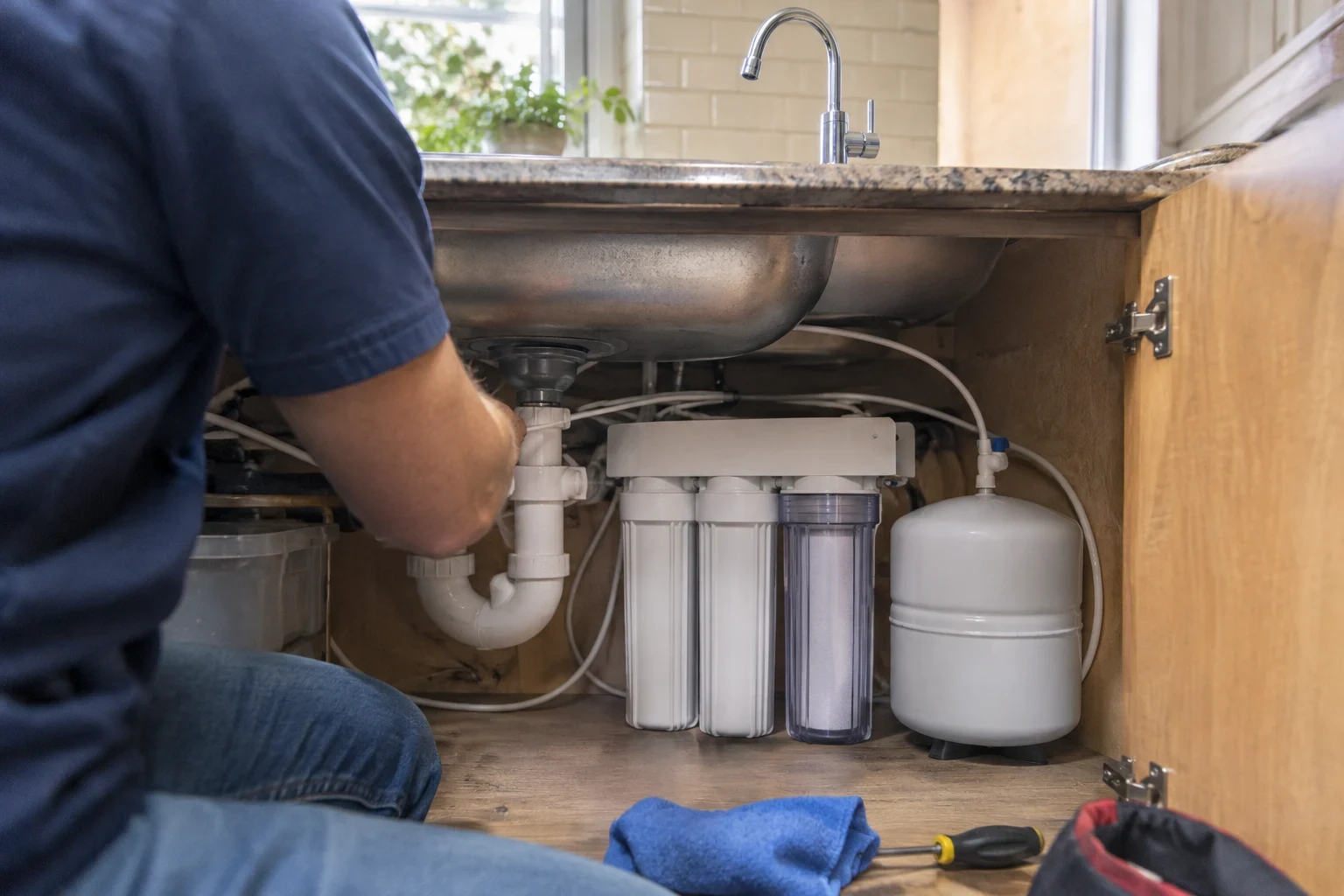
What Reverse Osmosis Does at Your Kitchen Sink
Inside an RO system, line pressure pushes water through a thin-film composite membrane with pores so small that most dissolved solids get left behind, including lead, nitrates, sodium and the minerals that cloud ice cubes. Carbon stages before and after the membrane remove chlorine and chloramine, which cause most off tastes in tap water. The treated water waits in a small pressurized tank under the sink and runs to its own faucet.
RO makes sense when you want better water for drinking, coffee and cooking but don't need every tap in your home treated. If hardness on fixtures or chlorine smell in the shower is the issue, our water softeners or whole-home filtration pages cover those jobs.
Most RO units that disappoint were simply never maintained. A clogged sediment filter starves the membrane, and spent carbon lets chlorine degrade the membrane material. We plan every install around keeping those parts working.
What Your RO Install Includes
Feed valve on the cold line
We add a dedicated shutoff on the cold supply so the system can be isolated for filter changes while the rest of the kitchen keeps its water.
Prefilter and membrane housings
A sediment prefilter traps rust and grit, then a carbon block strips chlorine before water reaches the membrane. We mount the housings within reach and leave room to turn a filter wrench.
Pressurized storage tank
We check the bladder precharge before the tank fills. An incorrect precharge is the usual reason a new tank gives only a trickle or empties after a glass or two.
Dedicated faucet and drain connection
The faucet goes in an existing sink hole or a new one we drill. A drain saddle above the trap carries reject water away without backflow.
Optional refrigerator or ice maker line
We can route tubing from the RO tank to the water inlet on your refrigerator, so the ice maker and door dispenser draw on filtered water as well.
Walkthrough of upkeep
At the end of the visit you'll practice shutting the feed valve, swapping a cartridge and draining the tank yourself. Each housing gets a label with its stage.
Signs Your Home Needs an RO System or a Service
Tap water tastes like a pool
Chlorine and chloramine are added on purpose for safety, but the taste keeps people from drinking enough water. A carbon postfilter after the membrane takes care of it at the glass.
Older faucets or soldered copper
In older homes, lead often comes from brass fixtures or old solder joints rather than the water supply itself. An RO membrane removes a high share of it right at the faucet you drink from.
Your RO faucet barely flows
Slow flow usually points to clogged prefilters, a tank that has lost its air charge or low incoming pressure. Each has its own fix, and none automatically means a new system.
The drain never stops running
Water that keeps trickling under the sink once the storage tank has filled usually means a failed automatic shutoff or check valve. Until it is fixed, the system wastes water to the drain around the clock.
Old taste is coming back
When filtered water starts tasting like tap again, the carbon is spent or the membrane has worn out.
How an RO Install Day Runs
- 1
Phone call and quote
You call, tell us about your sink, countertop and whether you want a refrigerator line, and we set a time to look at the space and give you a free quote.
- 2
Look under the sink
We check the existing shutoff valves, drain layout and cabinet room, and we confirm incoming water pressure. Membranes work best above roughly 40 psi, and lower pressure may call for a booster or permeate pump.
- 3
Installation
We protect the cabinet floor, install the feed valve, housings, tank, faucet and drain saddle, then flush the carbon and membrane to clear startup fines. Most installs take a few hours.
- 4
Leak check and handoff
We pressurize the system, check every fitting for leaks and run a full tank to waste so your first glass is clean. Payment is due when the install is complete, not before.
What Sets the Price of a Reverse Osmosis System
Your price comes down to the system you pick and how much work your sink and countertop need to accept it. We can give you a number over the phone or after a short look under the sink, and any quote we write stays good for 30 days. If you would rather spread the cost out, ask us about financing through U.S. Bank Avvance, on approved credit.
- Tank system or tankless
- A standard tank system is simple and has a long track record. Tankless units free up cabinet space and make water on demand, but they cost more at the start.
- Countertop material
- Laminate drills quickly. Granite and quartz need a diamond core bit and extra time, unless your sink already has an open hole we can use for the faucet.
- Extra stages
- A remineralization cartridge returns some calcium and magnesium for taste, and a permeate pump raises efficiency and speeds up tank refills. Each adds parts to the build.
- Refrigerator connection
- A line to the fridge adds tubing, routing through cabinets or the floor, and a fitting at the appliance.
- Condition of existing plumbing
- If the angle stops under your sink are seized or weeping, we replace them before tying in, because the RO feed relies on them.
Reverse Osmosis Questions
Something not covered here? (262) 710-2091
How often do the filters and membrane need changing?
Sediment and carbon prefilters usually need replacing every 6 to 12 months, depending on how much water you use and how much grit reaches them. The membrane typically lasts two to five years when the prefilters stay fresh. The postfilter is often swapped once a year. Keeping up with the prefilters protects the membrane more than anything else you can do.
How much water goes down the drain with RO?
Some incoming water is always used to flush rejected minerals off the membrane surface and out to the drain. A permeate pump and a working shutoff valve cut that share noticeably. If you hear water running to the drain while the tank is already full, a valve has failed and should be repaired.
Why does my system make less water in winter?
A membrane produces less as water temperature falls, and the water reaching your home in a Wisconsin January is much colder than in August. Slower refills through the cold months are expected. If output is still weak once spring arrives, check the prefilters or the tank's air charge first.
Should I put a softener in front of the RO?
If your home has hard water, a softener upstream keeps calcium from building scale on the membrane, which stretches its service life. It isn't required, but the two work well together. Our water softeners page explains how we size them.
What if I sign and then want to back out?
That's allowed. Once you sign, you still have three business days to cancel. You also don't pay in full until the install is complete and the system is up and running.
Ready for Better Drinking Water
Describe your kitchen and how your family uses water, and we'll suggest a system you can keep in good shape for years. Payment options come up in that same conversation, so you know where you stand before anything is scheduled.