ServicesWell Water Treatment
Well Water Treatment in Waukesha
We size and install treatment for private wells that struggle with iron, sulfur odor, sediment and hardness. Then we set it up so the media, valve and tanks keep doing their job for years. Ask about financing or a free quote, and we'll talk through what your water is doing.
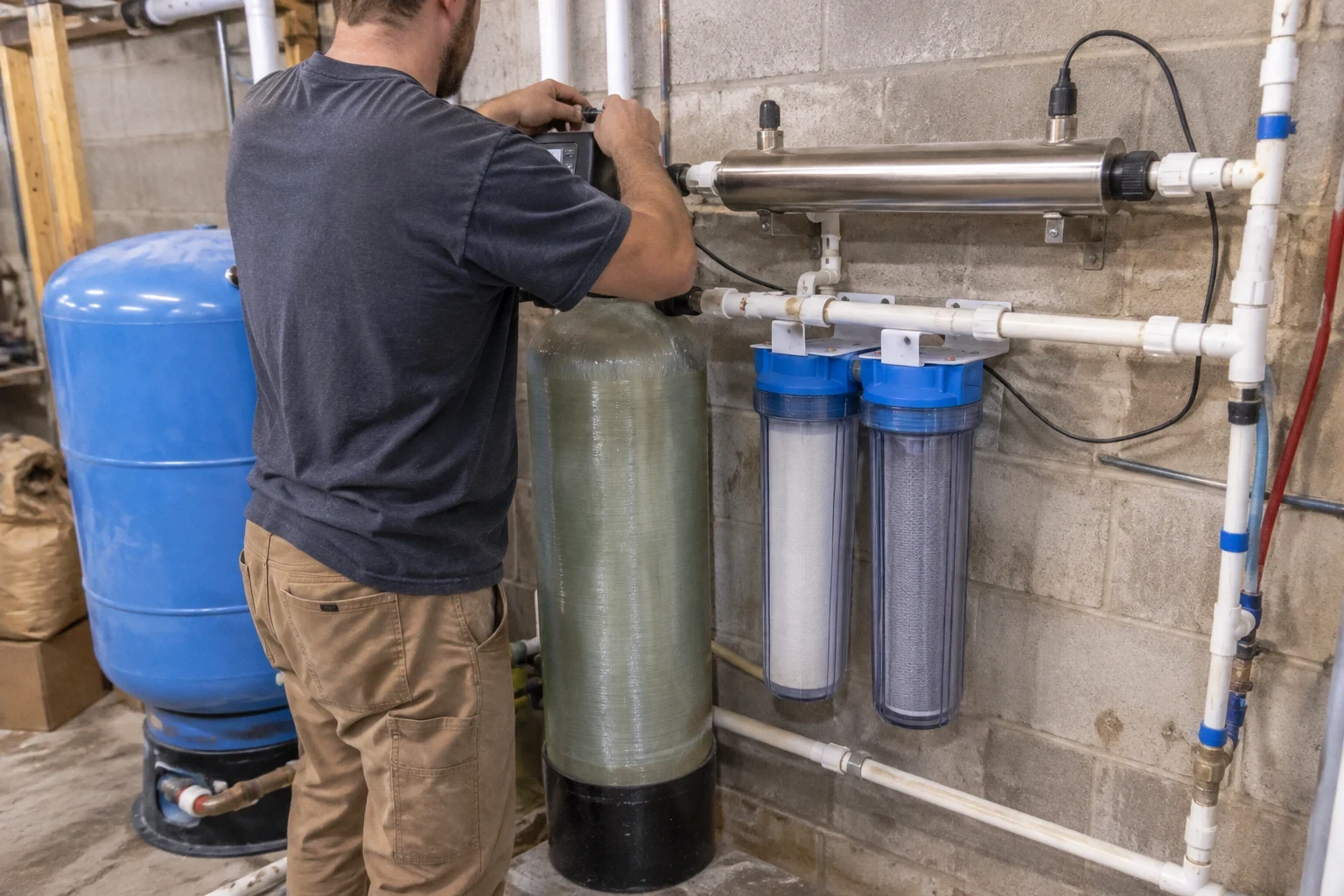
Why a private well needs its own treatment
Water from a private well carries whatever it picked up underground, and nobody treats it before it reaches your tap. Many wells in the Waukesha area pull hard water with dissolved iron, sometimes manganese, and now and then hydrogen sulfide, the gas that smells like rotten eggs. The equipment next to your pressure tank is the only treatment that water gets.
No single tank handles all of that. Dissolved iron comes out of the well clear, so a sediment cartridge lets it straight through; the orange color only shows up once the water meets oxygen in a toilet tank or shower. Hydrogen sulfide must be oxidized into a solid before media can trap it. Hardness is removed by ion exchange in a softener. We choose equipment for the problems your water actually has rather than installing a little of everything.
Sequence decides how long the system lasts. Iron left untreated coats softener resin, clogs faucet aerators and builds a layer of sludge at the bottom of the water heater. Dealing with it at the point of entry keeps the pipes, fixtures and appliances already in your home working longer.
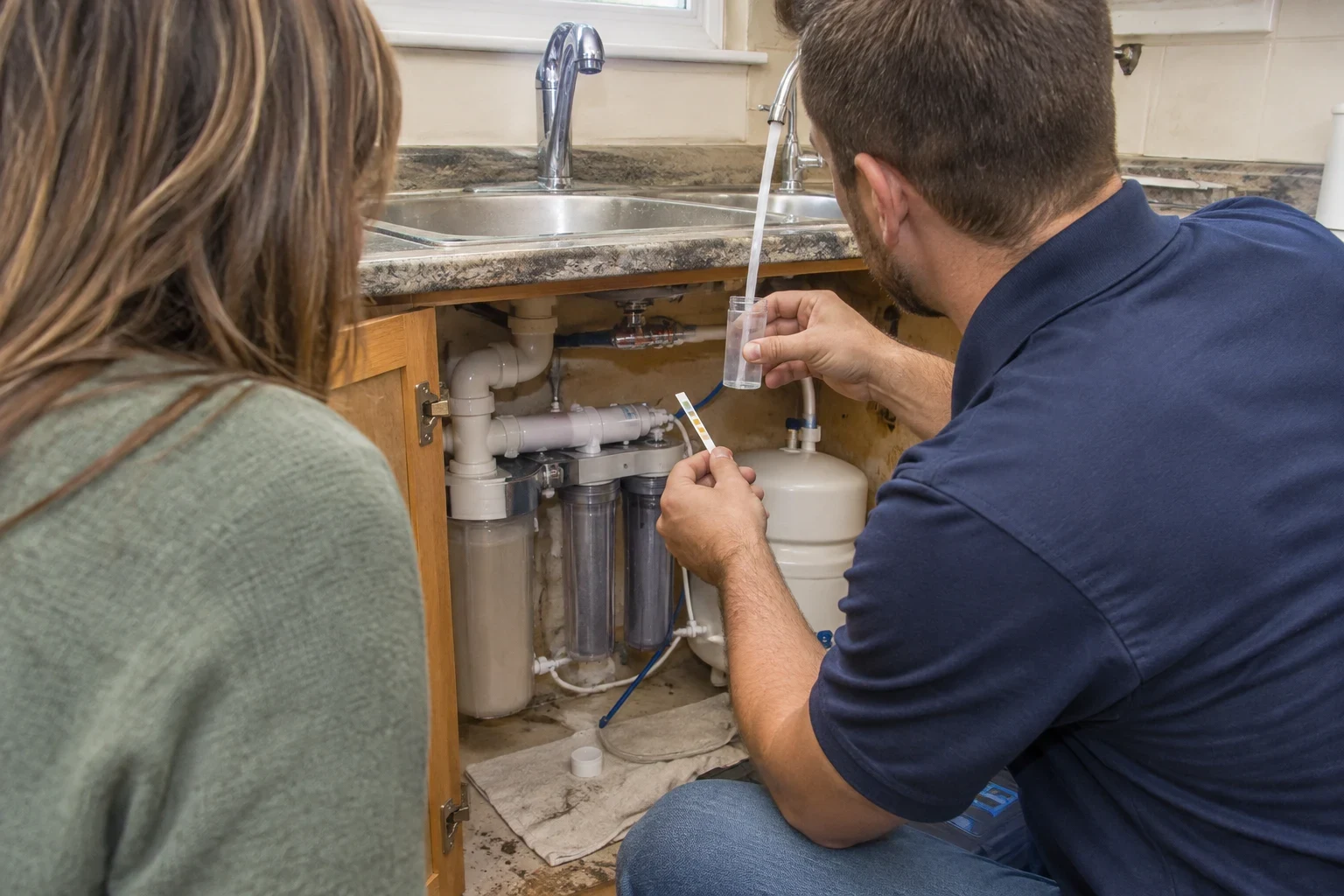
What the work includes
- 01
Sediment prefilter
A spin-down screen or cartridge housing goes in after the pressure tank. It catches sand and grit before they can score valve seals or pack into the filter media downstream.
- 02
Air-injection iron and sulfur filter
The tank holds a pocket of air that oxidizes dissolved iron, manganese and hydrogen sulfide into particles, which the media bed then traps. A scheduled backwash flushes what it caught down the drain and refreshes the air pocket, so there are no chemicals to add.
- 03
Softening when hardness is part of it
If your well is hard, we pair the iron filter with a softener sized to your household's daily use. Placing the iron filter first keeps the resin from fouling. Our Water Softeners page covers that equipment in more detail.
- 04
Bypass, drain and valve setup
A bypass valve lets water route around the treatment tanks during service, so the faucets in your home keep running while we work on the equipment. The backwash line runs to a suitable drain through an air gap, and we program the control valve's backwash frequency for your water.
- 05
Startup and walk-through
We purge air from the lines, run a manual backwash and check pressure at the taps. Then we show you the bypass, the settings and the few things worth checking a couple of times a year.
Questions about Well Water Treatment?
Call(262) 710-2091Signs your well water needs treatment
Orange or brown stains
Rust rings in toilets, tubs and laundry point to dissolved iron. Chlorine bleach sets those stains rather than lifting them.
Rotten-egg smell
That is hydrogen sulfide. If only the hot water smells, the magnesium anode rod in your water heater may be reacting with sulfate, which is a different and simpler fix we will point out.
Black specks or slime in the toilet tank
Dark grit suggests manganese. A reddish, slimy film often means iron bacteria feeding on the iron in your water.
A softener that keeps losing ground
Salt use climbs, the resin turns orange and hard water comes back. Iron is usually fouling the resin bed faster than regeneration can clean it.
Gritty water or clogged aerators
Sand and silt from the well wear valve seats and clog showerheads. A prefilter stops it early.
How the job runs
- 1
A call to talk it through
Describe what you're seeing and smelling, roughly how old the well equipment is and whether you have a recent lab report on the well. We explain financing, give you a free quote by phone, and that quote stays valid for 30 days.
- 2
Checking your equipment
We look at the pressure tank, the floor space beside it, the pump's flow rate and the nearest place a backwash line can drain. Flow rate counts because an iron filter needs enough water to lift and rinse its media bed each backwash.
- 3
Putting the system in
The work usually fits within a portion of one day. We shut the water off only while the bypass is cut in and the tanks are plumbed, lay drop cloths around the work area, and haul away pipe scraps and boxes when we finish.
- 4
Startup and sign-off
We bring the system online, check pressure at the taps and show you the upkeep. You pay in full when the install is finished, and you have three business days after signing to cancel.
What moves the price
Every well carries its own mix of minerals, so we can price the job only after we know what needs treating and how your plumbing is laid out. Equipment and labor show up as two separate lines on your quote, so you can see where the money goes. You can also finance the system through U.S. Bank Avvance, on approved credit.
- How many problems you're treating
- Iron alone needs one filter. Iron plus sulfur plus hardness means an iron filter and a softener working in sequence.
- Iron and sulfur concentration
- Higher levels need a larger media tank and more frequent backwash so the bed doesn't clog between cycles.
- Pump flow rate and household use
- A low-flow pump may limit the tank size that can backwash properly. Larger households need equipment that keeps up with peak demand.
- Space, drain and existing equipment
- Tight basements, a long run to a drain, or a fouled softener that needs replacing rather than reuse all add labor or parts.
Well water treatment questions
Do I need lab results before you can quote?
They help a lot. If you already have a recent lab report on your well, we size the equipment directly from those numbers. If you don't, describe what you're seeing and we'll explain which results matter most for sizing before you decide anything.
Can a softener handle my iron by itself?
A softener can remove small amounts of dissolved iron, but higher levels coat the resin and shorten its life. Iron that has already oxidized, the orange kind, passes through a softener untreated. That's why we usually put a dedicated iron filter ahead of it.
What upkeep does the system need?
An air-injection filter mostly runs itself. Swap the sediment cartridge when pressure starts to drop, check the control valve's clock after a power outage and keep the softener salt topped up. The media wears out slowly over years, and replacing it costs far less than a new system.
Will treatment lower my water pressure?
Every filter adds some resistance, so we size the tanks and valve to your pump's flow rate. A correctly sized system shouldn't cause a noticeable drop at the taps. When pressure falls later, a loaded prefilter cartridge is the usual cause.
Where does the backwash water go?
It goes to a floor drain, laundry standpipe or similar drain through an air gap. For a few minutes it runs rust-colored and may smell of sulfur. If your home is on a septic system, we talk through drain options with you before install.
Find out what financing your well system would take
Tell us what your water is doing and we'll explain the equipment that fits and how financing through U.S. Bank Avvance works, on approved credit. Your free quote holds for 30 days.