What Is the Lifespan of a Whole House Water Filter in Waukesha?
A whole house filter is several parts that wear out on different schedules, and knowing which part you are asking about changes the answer.
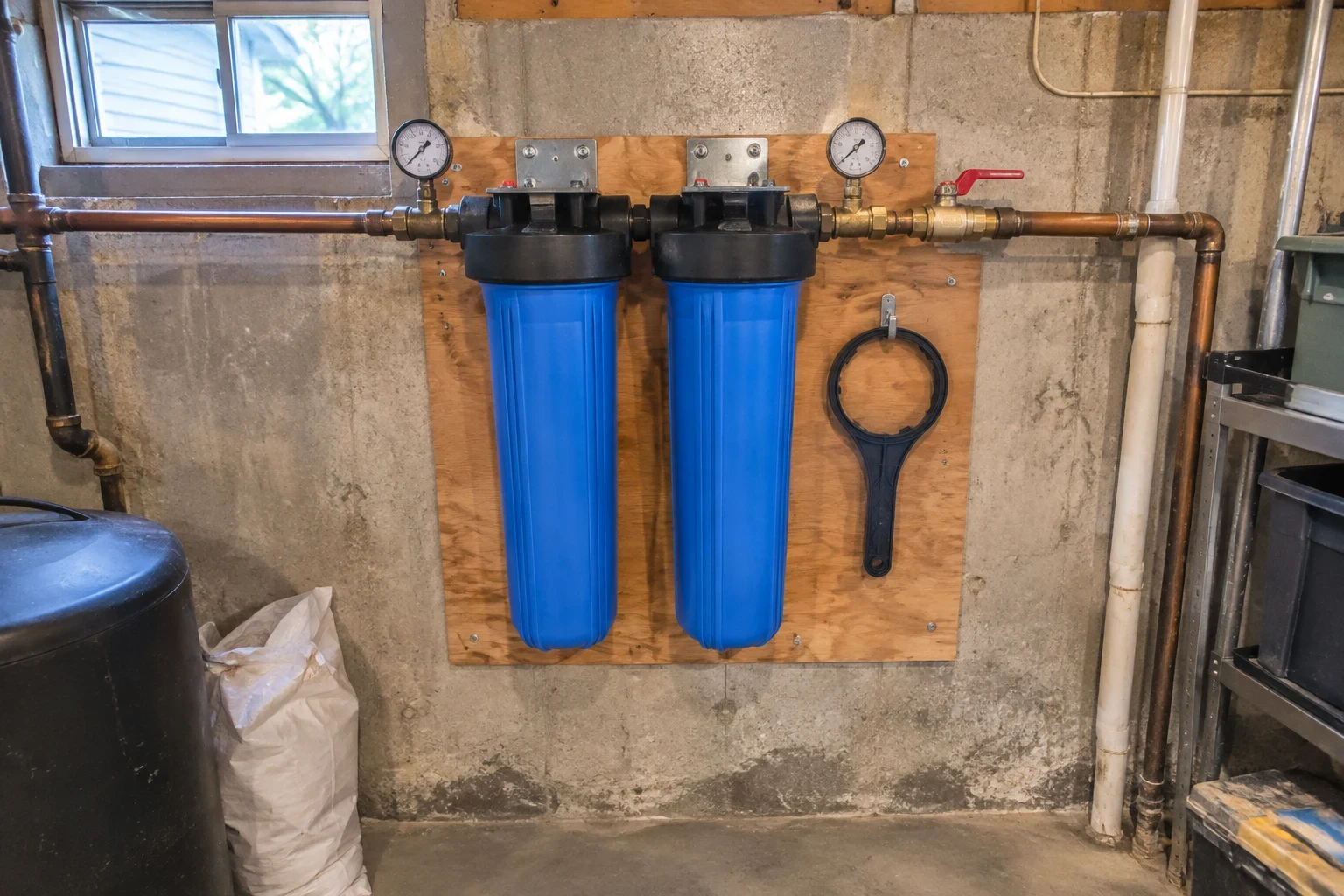
What is the lifespan of a whole house water filter?
It depends on the part. Cartridges in a housing-style whole house filter usually last 3 to 12 months. Carbon media in a backwashing tank system often runs 5 to 10 years. A well-kept housing, tank or control valve can serve 10 years or more. Your water and how much your home uses set the actual pace.
Which parts wear out, and how fast
Most whole house systems fall into two designs. A cartridge system uses one or more large filter housings, often 4.5 by 20 inch, with replaceable cartridges inside. A tank system holds loose carbon media in a mineral tank and uses a control valve to backwash that media on a schedule, flushing out trapped particles so the bed keeps working.
The consumable parts are the ones you replace. The structural parts are the ones you maintain so they never need replacing. Here is how each one typically ages in a home with average use:
- Sediment prefilter cartridge: roughly 3 to 6 months, sooner if the water carries sand or rust.
- Carbon block or granular carbon cartridge: roughly 6 to 12 months, based on gallons treated and chlorine level.
- Carbon media in a backwashing tank: often 5 to 10 years, because backwashing clears particles that would otherwise clog it.
- Filter housings and sumps: 10 years or more if the O-rings are kept clean and lubricated.
- Control valve on a tank system: many years, with a seal and spacer kit swapped as part of routine service.
- Mineral tank: the longest-lived part, rarely the reason a system is retired.
What shortens or stretches the life of the media
Carbon removes chlorine by a chemical reaction on its surface, and that surface gets used up. The more disinfectant in the water and the more gallons your home runs through it, the faster the carbon reaches its limit. Chloramine, a common alternative disinfectant, reacts more slowly than chlorine, so systems treating it usually need catalytic carbon and a larger media bed to hold up over time.
Sediment is the other big factor. Fine particles plug the pores in a cartridge long before its carbon is spent, which is why a separate sediment stage in front of the carbon pays for itself in longer carbon life. On private wells, iron and hydrogen sulfide can coat carbon and foul it quickly, so a well usually needs its own pretreatment ahead of any carbon stage.
Household size matters too. A family of five running laundry, showers and a dishwasher every day pushes far more water through the bed than a couple who travels, and the replacement schedule should follow real use rather than the calendar alone.
Signs your filter is near the end
The most reliable signal on a cartridge system is pressure. With a gauge before and after the housing, you can watch the drop across the filter grow as it loads up. When the difference climbs noticeably, or when the shower feels weaker on the upper floor, the cartridge is restricting flow.
Taste and smell tell you about the carbon. If the chlorine smell comes back at the kitchen tap or in the shower, the carbon has stopped doing its job even if water still flows freely. A cartridge that comes out dark brown or orange points to sediment or iron, which tells you to change the prefilter more often or look at what is coming in.
On a tank system, watch the control valve. A display error, a valve that no longer cycles at night, or water running to the drain line during the day usually means a seal, piston or motor needs attention, not that the whole system is finished.
Upkeep that keeps the system running for years
Most whole house filters are retired early because small maintenance items were skipped, not because the core equipment wore out. A cracked housing, a leaking O-ring or a valve that stopped backwashing can all be prevented with a few minutes of attention a year.
Wisconsin winters add one specific risk. A filter mounted on an outside wall, in a crawl space or in an unheated garage can freeze, and ice inside a plastic sump will crack it. Keeping the equipment in heated basement space, or insulating the line and housing, protects it.
If your home also has a water softener, the carbon stage usually goes in front of it. Removing chlorine first protects the softener resin, which degrades with long exposure to disinfectant, so one well-kept filter helps extend the life of a second piece of equipment.
- Replace cartridges on a schedule set by your usage and pressure readings, not only when taste changes.
- Clean the O-ring and coat it lightly with food-grade silicone grease each time the housing is opened.
- Hand-tighten the sump with the housing wrench; overtightening stresses the threads and cracks the plastic over time.
- Sanitize the empty housing when changing cartridges to keep bacterial film from building up.
- Exercise the bypass valve once or twice a year so it does not seize when you need it.
- On tank systems, confirm the backwash time is still correct and have the valve seals checked during routine service.
More questions about whole house filter life
Something not covered here? (262) 710-2091
Can I replace only the carbon in a tank system instead of the whole unit?
Yes. Rebedding means emptying the old media and refilling the same tank with fresh carbon, and it is the normal way to renew a tank system. The tank, valve and plumbing stay in place.
Does a whole house filter need a different schedule on well water?
Usually it does. Iron, manganese, sediment and sulfur in well water load carbon faster, so wells often need dedicated well water treatment ahead of the filter to keep the carbon from fouling early.
Is it worth adding reverse osmosis if I already have a whole house filter?
They do different jobs. The whole house filter handles chlorine and sediment at every tap, while an under-sink reverse osmosis unit polishes drinking and cooking water. Running RO after a carbon filter also helps its membrane last longer.
Plan the next ten years of your filter
If your current system is aging or you are weighing a new whole-home filtration setup, a short phone call gets you a free quote and clear financing information. Financing is available through U.S. Bank Avvance on approved credit, and your quote holds for 30 days so you can plan the work around your schedule.